.png)


How to Recover from Burnout A Practical Guide for High-Achievers
- Jason Medlock
- Dec 11, 2025
- 18 min read

When you’ve hit the wall, recovery isn’t a marathon you start sprinting. It’s about triage. It’s about stopping the freefall, calming your fried nervous system, and just giving yourself a little room to breathe.
What follows is a roadmap built not just on theory, but on what I’ve seen work for countless high-performers—from athletes to entrepreneurs—who felt like they had nothing left in the tank. We’ll start with immediate first aid, then move into rebuilding with science-backed practices, mindset shifts, and deeper work through tools like QHHT and coaching.
But first, we have to put out the fire.
Your First 48 Hours: Burnout Triage
When you’re deep in burnout, the first two days are purely about damage control. Forget long-term plans or big-picture solutions for a moment. This is your emergency first-aid kit for profound mental and physical exhaustion.
The immediate goal is simple: stop the downward spiral. You need to create just enough stability to begin the real work of recovery.
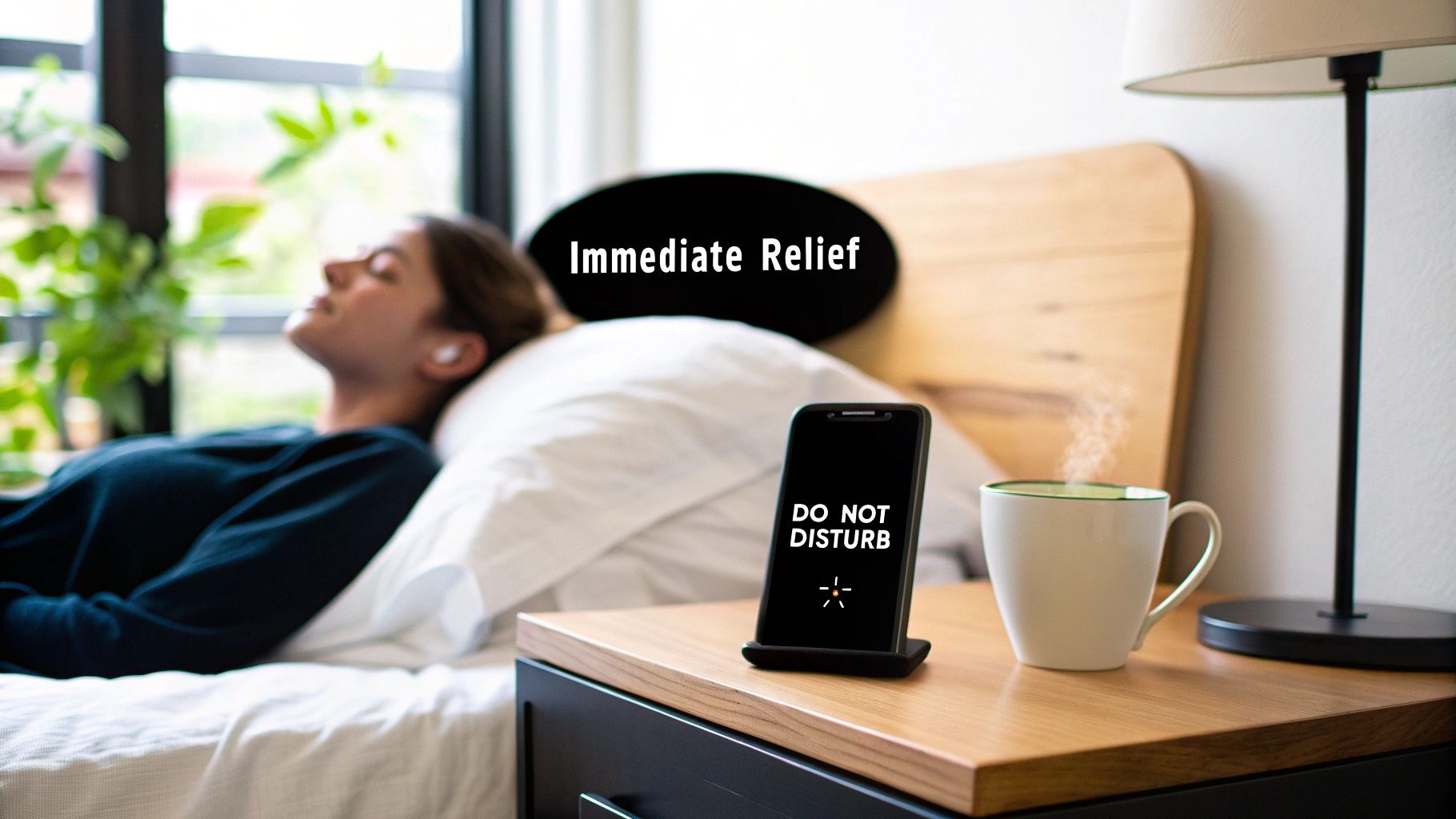
This phase isn't about solving the problem. It’s just about creating enough space so you can actually think again. Many high-achievers really struggle here because their instinct is to push even harder, but that just digs the hole deeper. Your only job right now is immediate relief.
Creating Psychological Breathing Room
Your first real action is to carve out a pocket of time for yourself. It could be one day, it could be two. This often requires communicating your needs clearly and without the guilt that’s so common when you’re completely depleted.
If you need to ask for time off work, here’s a practical, professional way to do it:
Subject: Need to Use Personal/Sick Day - [Your Name] Hi [Manager's Name], I need to take [Date] and [Date] as personal/sick days to address a health matter that requires my full attention. I've ensured my critical tasks for these days are covered: [briefly mention 1-2 key handoffs, e.g., 'Project X report is complete' or 'Sarah will handle urgent client inquiries']. I will be offline but will check in briefly at the end of the day on [Date] if needed. Thank you for your understanding. Best, [Your Name]
This template works because it's direct and professional. You're stating a need, showing responsibility, and setting a clear boundary. No over-explaining, no apologies—just necessary action for your well-being.
Simple Actions for Immediate Relief
Okay, you've secured the time. Now, fight the urge to fill it with "productive" chores. Your only task is to dial down the noise. These aren't long-term fixes; they are emergency measures designed to calm your system.
To help you focus, here's a quick-reference guide for those first couple of days.
Immediate Burnout Triage Action Plan
Action Item | Purpose | Real-World Example |
|---|---|---|
Radical Unplugging | Reduce external stimuli and mental clutter. | Turn off all non-essential phone notifications. Let close family know you'll be less responsive for 48 hours. |
Minimalist Nutrition | Decrease decision fatigue and nourish your body easily. | Stick to simple, easy-to-digest foods like soups, smoothies, or oatmeal. Don't worry about complex meal prep. |
Gentle Sensory Input | Soothe an overstimulated nervous system. | Listen to instrumental music, take a warm bath with Epsom salts, or just sit outside and listen to the birds. |
Mindful Movement | Move your body without the pressure of a "workout." | Take a slow, 15-minute walk around the block. Leave your phone at home. The goal is gentle motion, not performance. |
These small, intentional actions are more powerful than they seem. They're about taking back control in the simplest way possible.
This initial phase is the most critical part of the journey. By creating space and calming your nervous system, you’re laying the foundation for the deeper healing to come. As a QHHT practitioner and performance coach, I guide my clients through this exact process, helping them move from triage to a genuine reconnection with their purpose and energy. My services are designed to help you navigate this difficult first step and build a solid foundation for lasting recovery.
You've managed to carve out a little breathing room. That’s a huge first step. Now, let’s use that newfound clarity to figure out what started this fire in the first place. If you want to recover from burnout for good, you have to look past the quick fixes and get to the root of the problem—the specific stressors that have been chipping away at you.
This isn't about blaming yourself or anyone else. Think of it as a compassionate self-audit. You're a detective, and your daily life is the crime scene. It's time to look for clues.
Grab a journal and get brutally honest with yourself. Don't filter, don't judge—just write.
When do I feel most drained? Be specific. Is it right after that Monday morning team meeting? The moment you open your inbox? Or late at night when you're still trying to finish one last thing?
What tasks do I put off, again and again? Procrastination is often a red flag. We tend to avoid work that feels pointless or soul-crushingly overwhelming, which points directly to a misalignment with our values.
Which conversations leave me feeling on edge or completely wiped out? This can shine a light on the relationships and power dynamics that are sucking you dry.
Your answers are data. They’re the breadcrumbs that lead back to the source of the burnout. Most of the time, they fall into a few familiar categories.
Common Burnout Drivers
As you look at your notes, see if you can spot a pattern. Most triggers can be traced back to one of these core issues. Does any of this sound familiar?
An Unmanageable Workload: This is the most obvious one. Simply too much on your plate and not enough hours in the day to do it.
Lack of Control or Autonomy: That feeling of being micromanaged, with no real say over your schedule or how you do your work. It's a massive stressor.
Feeling Unrewarded: We're not just talking about money here. It's the lack of recognition, appreciation, or even just a simple "thank you" for a job well done.
A Toxic or Unfair Environment: When you're dealing with favoritism, a cutthroat team culture, or just feel like you’re completely on your own, it's incredibly depleting.
A Clash of Values: This is a big one. It's that constant internal friction you feel when your personal values don't line up with what your company stands for or how it operates.
Understanding these drivers is key, because burnout isn't just a personal problem—it's a systemic one. Globally, about 25% of employees say they're dealing with persistent burnout, and a lot of that comes down to the workplace culture. Companies that actually create psychological safety—where people feel safe enough to talk about stress without fear—see much lower burnout rates. If you want to dig deeper, you can learn more about the latest data on burnout trends and workplace dynamics and see just how widespread this really is.
From Identification to Action: Setting Boundaries That Stick
Once you know what’s draining your battery, you can start building a defense. This is where boundaries come into play. A boundary isn't a wall you put up to shut people out; it's a rule you set for yourself to protect your energy. It’s not about being difficult; it's about being clear.
A boundary is you saying, "This is what I need to stay healthy and effective." It's an act of self-preservation, not selfishness.
To work, boundaries have to be specific, communicated clearly, and—this is the hard part—enforced consistently.
Here’s how it looks in the real world:
Example 1: The Freelancer
The Trigger: Clients are pinging you at all hours of the night and on weekends. They expect instant replies, and the line between your work life and personal life has completely disappeared.
The Boundary: Set clear "office hours." Add a simple line to your email signature: "My office hours are 9 AM - 5 PM, Monday to Friday. I will respond to all messages within that window." And then, you have to actually stick to it. No more late-night replies.
Example 2: The Team Leader
The Trigger: Upper management keeps dropping projects with impossible deadlines on your team, never asking about your current workload. Everyone is constantly overworked and stressed out.
The Boundary: Instead of just saying "yes" and accepting the chaos, you push back strategically. Try responding with something like this: "Thank you for the assignment. Based on my team's current capacity, a realistic completion date for this project is [New Date]. If we need to hit the proposed deadline of [Original Date], we'll have to deprioritize [Project X] or get some additional resources. Which option works best for you?"
See the difference? You’re not just saying "no." You're reframing the conversation into a collaborative, strategic discussion. You protect your team while also showing that you're thinking about the bigger picture.
As a performance and mindset coach, this is exactly what I help my clients do—pinpoint those triggers and then find the right words to build boundaries that feel authentic and strong. My services are tailored to help high-achievers like you develop these critical skills, stopping the energy leaks so you can finally start refilling your tank.
Rebuilding Your Resilience with Science-Backed Practices
Burnout isn’t just a state of mind; it's a deep biological disruption. When you're under chronic stress, it fundamentally changes your nervous system, your hormones, and even how your brain functions. To truly get back on your feet, you have to look past the surface-level fixes and start rebuilding your resilience from the ground up, using practices that are actually backed by science.
This means we need to go beyond the generic advice you always hear, like "get more sleep," and really dig into the why behind each action. It's about making conscious choices that directly push back against the physiological damage burnout has caused. By weaving new daily routines into your life, you can begin to regulate your entire system and get your energy back.

Fueling Your Recovery with Strategic Nutrition
When you're burned out, your body is essentially swimming in cortisol, the main stress hormone. This constant state of high alert throws everything off balance, affecting your mood, your digestion, you name it. What you eat can either fan those flames or help extinguish them.
Forget about restrictive diets. The real goal here is to nourish your brain and body with foods that stabilize your blood sugar and give your adrenal glands the support they need.
Complex Carbohydrates: Think oats, brown rice, and sweet potatoes. These provide a slow, steady stream of glucose to your brain, which helps prevent the energy crashes that make fatigue and irritability so much worse.
Omega-3 Fatty Acids: You’ll find these in salmon, walnuts, and flaxseeds. These healthy fats are absolutely essential for brain health and have been shown to help dial down symptoms of anxiety and depression.
Magnesium-Rich Foods: Spinach, almonds, and even dark chocolate are great sources. Magnesium is a natural relaxant that helps calm the nervous system, and our bodies burn through it rapidly when we're stressed.
Practical Example: Instead of skipping breakfast or just grabbing a sugary pastry on the go, start your morning with a bowl of oatmeal topped with walnuts and berries. This one simple change gives you sustained energy and key nutrients to start fighting stress from the moment you wake up.
The Right Kind of Movement for Mental Fatigue
Let’s be honest, the thought of a high-intensity workout can feel completely out of reach when you're exhausted. In fact, pushing yourself too hard can actually backfire by spiking cortisol and making you even more tired. The secret is to choose movement that soothes your nervous system instead of stressing it out more.
Low-impact, mindful activities are your best friends during this recovery phase. They help increase blood flow to the brain, release those feel-good endorphins, and ease muscle tension without draining your already low energy reserves.
Try to work one of these into your day:
A 20-minute walk outside, paying attention to the sights and sounds around you.
A gentle yoga flow or a dedicated stretching session.
Slow, intentional movements like tai chi or qigong.
The objective isn't to burn calories. It's to reconnect with your body and gently let go of built-up stress.
Optimizing Sleep for Cognitive Repair
Burnout doesn't just make you tired—it wrecks your sleep quality. This prevents you from getting the deep, restorative rest your brain desperately needs to repair itself. True sleep optimization isn't just about clocking eight hours in bed; it’s about creating the right conditions for quality rest.
You need to create a "wind-down" ritual that acts as a clear signal to your body that it's time to shut down. This is a non-negotiable step in burnout recovery.
Practical Example: A Wind-Down Routine an Hour Before Bed:
Disconnect: Put all your screens away. The blue light from phones and laptops messes with the production of melatonin, the hormone that runs your sleep-wake cycle.
Lower the Lights: Dim the lights around your home to create a calmer, more relaxed atmosphere.
Find a Relaxing Activity: Read a physical book, listen to some calming music, or take a warm bath with Epsom salts.
Clear Your Mind: Write down three things you're grateful for, or just get any racing thoughts out of your head and onto a piece of paper.
Restoring Energy with Non-Sleep Deep Rest
Sometimes, even when you do everything right with your sleep hygiene, you still feel drained during the day. This is where a technique called Non-Sleep Deep Rest (NSDR) can be a game-changer. NSDR involves practices like yoga nidra or guided meditation that bring you into a state of profound relaxation without you actually falling asleep.
Just 10-20 minutes of NSDR can help replenish your dopamine levels, which sharpens your focus and boosts your motivation. It's like a system reboot for your brain, offering a kind of rest that can feel even more restorative than a quick nap. You can easily find plenty of free guided NSDR protocols online.
As a coach, I see these science-backed practices as the physical foundation we build upon for the deeper mental and emotional work. My services integrate these principles to help you get your biology back in balance, giving you the capacity to make the mindset shifts required for a full and lasting recovery.
Rewiring Your Mindset and Reconnecting with Your Purpose
Getting over burnout is about more than just catching up on sleep. While physical rest is a critical first step, true recovery requires a fundamental psychological shift. Once you’ve started to stabilize your system with better sleep, nutrition, and movement, it’s time to look at the underlying mindsets that got you here in the first place.
This is where the real work begins—confronting the thought patterns that keep you stuck and reintroducing genuine joy and meaning back into your life. We have to address the perfectionism, the imposter syndrome, and the deep-seated fear of failure. It’s about moving from a state of pure survival back to a place of purpose, and this is often where specialized, one-on-one support can change everything.

Uncovering the Roots with Deeper Work
Burnout rarely comes out of nowhere. It often stems from deep-seated beliefs we aren't even consciously aware of. These subconscious patterns are like old programming, dictating our reactions and driving our behaviors, trapping us in a cycle of over-commitment and exhaustion. To truly break free, we have to go to the source.
This is why modalities like Quantum Healing Hypnosis Technique (QHHT) and targeted hypnotherapy are so incredibly powerful. These approaches are designed to gently bypass the critical, analytical mind and access the subconscious, where these core beliefs are stored. It’s not about losing control; it’s about gaining a much deeper understanding of your own inner operating system.
In a QHHT session, you are guided into a natural state of deep relaxation, allowing for a dialogue with your Higher Self or subconscious mind. This is where profound insights and healing can occur, revealing the "why" behind your burnout.
Practical Example: I once worked with a highly successful entrepreneur who was on the verge of complete collapse. Logically, she knew she needed to delegate, but she just couldn't bring herself to let go of control. During her QHHT session, we uncovered a forgotten childhood memory where she felt immense pressure to be the "responsible one" after a family crisis. Her subconscious had forged a powerful link: letting go of control meant letting people down. Bringing that hidden belief into the light was the key. It finally allowed her to build a team she could trust and get her life back.
Challenging Your Burnout-Prone Beliefs
You don't have to wait for a hypnosis session to start this work, though. You can begin challenging the thought patterns that feed burnout right now. Just grab a journal and take a moment to reflect on these common mental traps:
Perfectionism: The insidious belief that anything less than flawless is a total failure.
Imposter Syndrome: That persistent, nagging feeling that you're a fraud and are about to be "found out."
The "Hustle" Mentality: The dangerous idea that your self-worth is directly tied to your productivity.
Once you identify which of these resonate, you can start to actively reframe them. For more on this, you can explore how to use techniques from neuroscience and hypnosis to build new neural pathways for confidence in our guide on unlocking mental clarity and confidence.
Reconnecting with Your Why
As you begin to shed these limiting beliefs, something amazing happens—space opens up. Space for you to reconnect with your purpose. Burnout creates a profound sense of disconnection from the very things that once lit you up. The final piece of the mindset puzzle is to intentionally rediscover what truly matters.
This isn't about finding some grand, singular "purpose." It’s much simpler. It's about re-engaging with your core values and letting them guide your day-to-day choices.
Actionable Steps to Rediscover Your Purpose:
Create a "Joy List": Brainstorm at least 20 things—big or small—that genuinely make you feel alive, curious, or happy. Don't censor yourself. It could be anything from hiking a new trail to visiting a museum or learning a new skill.
Schedule Joy: Pick one item from your list and put it in your calendar for this week. Treat it like a non-negotiable work meeting. This is an appointment with yourself.
Reflect on Your Values: Ask yourself, "What is most important to me in life?" Is it connection, creativity, freedom, or something else? Write down your top three and think about how you can bring more of them into your daily life.
This process of rewiring your mind is the heart of a lasting recovery. It’s not a quick fix, but a deliberate practice of choosing a different way of being. As a QHHT practitioner and coach, I specialize in guiding clients through this exact journey—helping them uncover their blocks, rewrite their stories, and build a life that feels authentic and sustainable.
Creating Your Sustainable Burnout Prevention Plan
Clawing your way back from burnout is a monumental effort, but the real win is learning how to stay there. This isn't about a frantic scramble back to "normal." It's about fundamentally shifting how you operate to create sustainable performance—building a strategy that fiercely protects your energy and well-being for the long haul.
This whole process kicks off with a new perspective on your most valuable asset: your own energy. Think of it like a bank account. You have to know what’s going in and what’s coming out to avoid going into the red.
Designing Your Personal Energy Budget
Every single day, you have a finite amount of energy to spend. Each meeting, task, workout, or even a social chat is either a deposit or a withdrawal. A practical energy budget helps you get intentional about where it all goes.
Try tracking your energy for just one week. A simple notebook or a notes app on your phone is all you need.
Pinpoint Your Drains: Make a note of the activities that leave you feeling heavy, depleted, or just plain irritable. Get specific. It might be that 3 PM project update call or mindless social media scrolling that sucks the life out of you.
Identify Your Deposits: What actually recharges your batteries? List the things that genuinely fill you up. This could be a 15-minute walk without your phone, blasting a favorite album, or a quick call with a friend who always makes you laugh.
Tally the Score: At the end of the week, take an honest look at the balance sheet. If your days are packed with withdrawals and have barely any deposits, you’re running an unsustainable energy deficit. It's only a matter of time before you crash.
With this data in hand, you can start making strategic changes. This isn't about dodging every hard task. It's about purposefully scheduling in those energy deposits to balance out the drains.
Establishing Non-Negotiable Self-Care Rituals
For an energy budget to actually work, you need to establish some "non-negotiables." These are the self-care practices you treat with the same gravity as a career-making client meeting. They are the anchors that keep you grounded when the inevitable chaos of life kicks in.
These rituals don't need to be big, expensive, or time-consuming. They just need to be consistent and meaningful to you.
Practical Examples of Non-Negotiable Rituals:
A 20-minute walk first thing in the morning, phone left at home.
Five minutes of deep breathing or quiet meditation before you even open your laptop.
A hard stop to your workday at 6 PM, followed by an activity that has nothing to do with work.
Carving out one evening a week for a hobby you truly love, like painting or playing an instrument.
Consistency is everything. These small, daily acts of self-preservation are what build true resilience over time and stop you from sliding back into that all-too-familiar state of exhaustion.
Building Your Burnout Support Network
You cannot, and should not, go through this alone. A solid support network is one of the most powerful buffers against stress and burnout. This network needs to be filled with people you can be brutally honest with, without any fear of judgment.
This is one area where we see some stark generational differences. Recent data shows younger workers are getting hit with burnout hard, with a shocking 35% of those aged 18-24 expecting to need time off for stress-related mental health issues in 2025. This often comes from a reluctance to talk openly about stress with managers, which just goes to show how critical it is for workplaces to encourage that open dialogue. If you want to dive deeper into how generational differences play a role in burnout, you can discover the full findings from Mental Health UK.
Your personal network could include:
A close friend or family member who just gets it.
A mentor or a peer who understands the unique pressures of your field.
A professional coach or therapist who can offer unbiased, expert guidance.
As a performance and mindset coach, I spend much of my time helping clients build this exact framework. I guide them in creating a sustainable plan that actually fits their personal and professional life. My specialized mindset coaching programs are specifically designed to give you the structure and support to turn these prevention strategies into habits that stick for good.
A sustainable plan isn’t about being perfect; it’s about being proactive. It's about finally knowing your limits, honoring your needs, and having the courage to design a life that energizes you instead of drains you.
Making this shift from recovery to prevention is the final, and most empowering, step in your entire journey. It’s how you not only beat burnout but ensure you thrive long after it’s in the rearview mirror.
Your Path Forward and Where to Find Support
Navigating your way back from burnout is a journey, not a sprint. The most important thing to remember is to be compassionate with yourself as you move through each phase—from the initial triage and assessment to building long-term resilience and prevention strategies.
Burnout is a serious condition, not a personal failure. It’s a signal from your body and mind that something needs to change, and it’s perfectly okay to need help figuring out what that is.
While self-care practices are incredibly powerful, sometimes you need more than you can give yourself. If the self-help strategies aren't moving the needle or your symptoms feel like they're getting worse, reaching out for professional guidance is a sign of profound strength.
For those who feel their burnout is tangled up with other persistent feelings, it can be helpful to explore different avenues of support. You might find it insightful to learn how hypnosis can provide relief from depression, as the symptoms can often overlap.
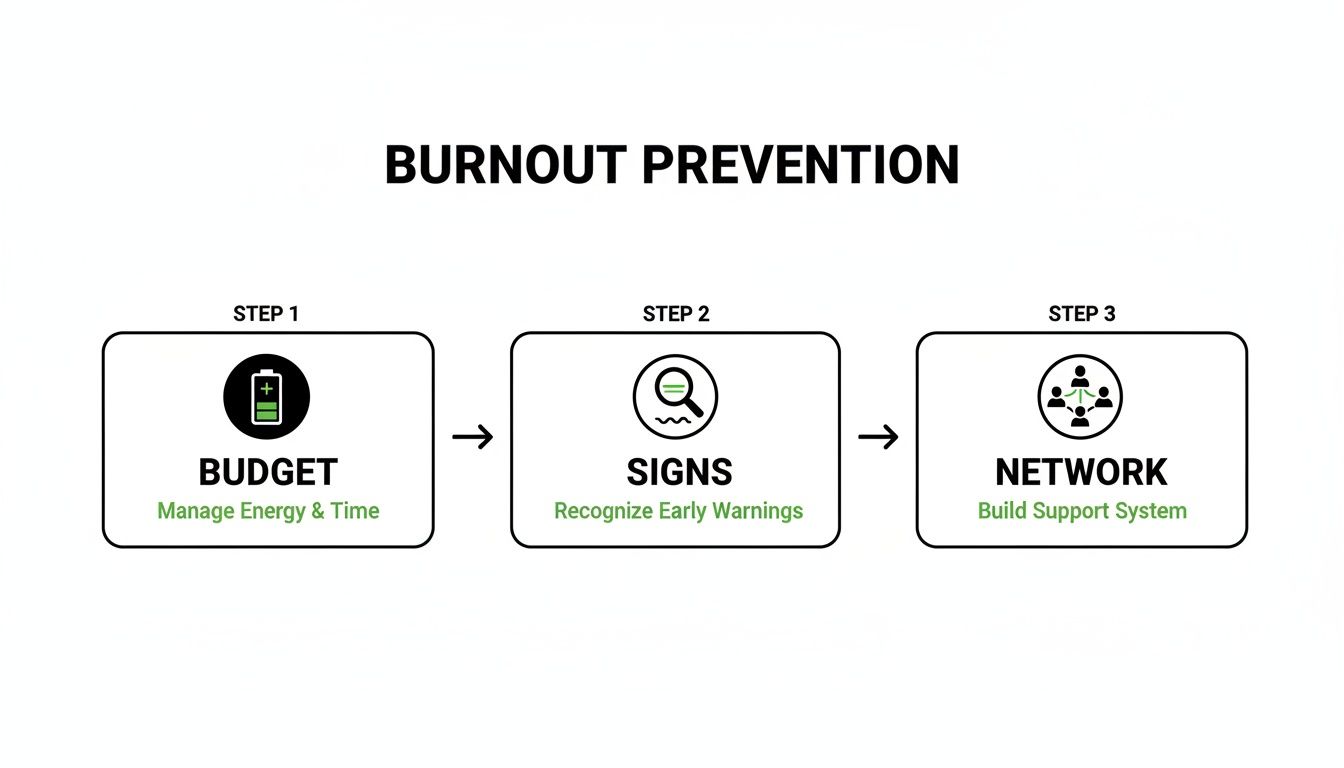
When we boil it down, a sustainable plan really rests on a few core pillars: budgeting your energy, learning to recognize the early warning signs, and surrounding yourself with a solid support network.
If you're ready to take a deeper, more personalized approach to your recovery, my services in QHHT, hypnosis, and performance coaching are designed to help guide you.
Common Questions on the Road to Recovery
When you're in the thick of burnout, a million questions can race through your mind. Having clear answers can make the path forward feel less daunting. Let's tackle some of the most common concerns that come up for high-achievers on the journey back to themselves.
How Long Does Burnout Recovery Really Take?
This is the big one, isn't it? The honest answer is: it depends. There’s no magic number or universal timeline. For some, a few weeks of serious rest and boundary-setting can work wonders. For others, particularly if the burnout has been creeping in for years, it can take several months to a year to truly feel like yourself again.
What really moves the needle on your recovery speed is a combination of things:
How deep you are in the burnout hole to begin with.
Your real ability to step back from the biggest sources of stress.
The strength of your support system—friends, family, and professionals.
Your own commitment to making new habits stick.
Can I Get Better Without Quitting My Job?
Yes, absolutely. It's a common myth that the only way out is to hand in your notice. Recovery is often possible right where you are, but it requires you to become an active participant in changing your work environment. You have to get surgical about identifying the triggers—is it the impossible workload, a lack of say in your projects, or a toxic manager?
Once you know the "what," you can start making direct changes. This could mean having a tough but necessary conversation about your responsibilities, blocking out non-negotiable focus time in your calendar, or learning to say "no" more often. However, if the company culture itself is the problem and there's no willingness to change, then leaving might just be the healthiest long-term move you can make.
What if I Start Feeling Burnt Out Again?
First off, take a deep breath. A relapse isn't a failure—it's feedback. If you feel those old familiar signs of exhaustion, cynicism, and detachment creeping back in, it's simply your body's alarm system telling you something is off-balance again.
Think of it as valuable data. Go back to your recovery plan and get curious. Where did a boundary get soft? Did you let your daily stress-management rituals slide? Did you take on a "quick project" that turned into a monster?
A relapse is just a signal that your energy reserves are running low again. Use it as your cue to pause, reassess what's draining you, and double down on the strategies that brought you back the first time.
For those who find themselves stuck in a cycle of burnout and recovery, it often points to deeper, subconscious patterns. This is where specialized support can create a permanent shift. My work with QHHT and performance coaching is designed specifically to find and rewire the root beliefs that drive you toward exhaustion. Together, we can build a much more resilient foundation so you're not just recovering, but thriving.
Are you ready to move from simply recovering to building a life of sustainable high performance? Let's connect and map out your path forward.
Jason Medlock Level 2 QHHT Practitioner | 281.309.7106 | www.hypnosawakening.com
Article created using Outrank

Comments